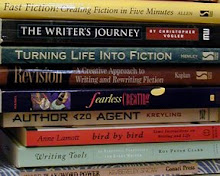
Two such wordsmiths attended my workshop last week at the Loft. Both are working on books and have learned from editors that they need to beef up their book's structure.
Friday, November 7, 2014
Structure Advice for Wordsmiths: Why Good Writing Comes After Good Structure When Developing Your Book
We
all admire wordsmiths, those who can sharpen and hone words until they
sing. I have the pleasure of working with many top-notch wordsmiths in
my book-writing classes: writers well-published in magazines, blogs,
newspaper columns, reviews. You'd recognize their names, you'd admire
them too.
Two such wordsmiths attended my workshop last week at the Loft. Both are working on books and have learned from editors that they need to beef up their book's structure.
Friday, October 31, 2014
Self-Promotion versus Creating Community--Where Is the Line for You?
Fame has always been a hot topic of discussion among writers. An unsavory one. A necessary one. If we long to be published, we ask those who are published: How did you get there? We read the bestseller lists and wonder about the process of climbing to such recognition. Once we have that contract, that great agent, we still must struggle to get our work received, recognized, reviewed. It gets wearying.
Because, for many of us, all we really want to do is make art. We want to write. We want to sink into the worlds on our page.
Friday, October 24, 2014
Self-Publishing: No Longer Just the "Vanity" Option for Today's First-Time Authors
Can you really self-publish? Or is it career suicide for a writer?
My indie-released songwriter friends never understood why writers are so hung up about self-publishing. Musicians have long separated from the labels and ventured out on their own, releasing their own CDs and working with indie distributors like cdbaby.
But we writers have been told for decades that unless we get an agent and go the traditional route, we'll never be taken seriously in our writing careers.
My indie-released songwriter friends never understood why writers are so hung up about self-publishing. Musicians have long separated from the labels and ventured out on their own, releasing their own CDs and working with indie distributors like cdbaby.
But we writers have been told for decades that unless we get an agent and go the traditional route, we'll never be taken seriously in our writing careers.
Friday, October 17, 2014
Learning versus Performing Mode: How Each Influences Your Writing Right Now
As
a writing teacher, I deal with discouragement every day. Not about my
teaching, although that can certainly arise. I face the discouragement of my
students, as they learn new skills.
Most challenging of the skill-building classes I teach is the advanced-level online book class. Twenty writers from all over the world gather to learn the art of revision.
Revision is truly the long-distance drive of writing a book. You've got the draft, you're enthused (astonished!) to have actually completed it, and now you want to make it sing. But revision skills are totally different than drafting skills. Even if the person is a good writer, they might not be able to revise. And it can lead to deep discouragement.
Most challenging of the skill-building classes I teach is the advanced-level online book class. Twenty writers from all over the world gather to learn the art of revision.
Revision is truly the long-distance drive of writing a book. You've got the draft, you're enthused (astonished!) to have actually completed it, and now you want to make it sing. But revision skills are totally different than drafting skills. Even if the person is a good writer, they might not be able to revise. And it can lead to deep discouragement.
Friday, October 3, 2014
Detail That Matters and Detail That Doesn't: Why the First Makes Your Writing Come Alive and the Second Dulls the Shine
Some
people love lots of sensory detail in writing. I'm one of them. If a
writer shows me the place, what the people wear, the smells and sounds,
I'm right there with the story.
But I've learned over the years that detail only works if it's relevant to what's happening. One of my teachers called it "salient detail." In other words, if the character or narrator isn't experiencing shifts because of the detail, it's irrelevant to the reader. It can even derail the story's pace and purpose, dulling its shine.
Example: In my current novel I'm writing about a small plane pilot who deliberately crashes her plane to stage her own death. With the help of a writing colleague who is a flight instructor, I researched the details inside the cockpit of a small plane. I got a lot of details! Maybe twenty. I knew I didn't want to list all of them. Too many details definitely drop the tension of the crash scene.
What Details Do Inside Your Reader's Brain
Each time you add a detail, the reader has to imagine it. (Or skip it--which many readers do!) They literally have to go to a different place in their brain, away from the processing of words and into the processing of visual or sensual memories, for an instant, to do this imagining.
This only takes an instant, but it's an instant for each detail! If I used twenty different descriptive details about the interior of the Piper Cub cockpit, it would be a long, long imagining. The reader would probably put the book down, having forgotten why we were in the cockpit in the first place. (To crash the plane.)
So I put myself inside the character's head. I thought about what she would see or experience that would have relevance for someone in this panicked state, about to stage her own death. I chose three of the twenty that echoed this panic:
1. Her breath fogging the windshield because it is very cold outside.
2. The yoke (steering wheel) of the plane, stained from years of flying, which she has been gripping for hours.
3. The cramped space that causes her to have to twist a certain way to get her jacket.
It was hard to jettison all the great details I'd researched, but they really didn't pertain directly to this moment in my story. Details must be relevant. Otherwise, they are just detours from the purpose of your scene.
This Week's Writing Exercise
Take a scene or a chapter or even a paragraph of your writing and consider the use of sensory details: what can be seen, touched, smelled, heard, tasted, or felt texturally (like temperature or roughness/smoothness of a surface).
If you aren't using any details, add a few.
Look at what you've chosen and ask yourself if the details are relevant. Here are the questions I like to use:
1. Is the detail being directly experienced by the narrator in that moment?
2. Does the detail have an important meaning for the narrator, opening up more of the inner story just because it's present?
3. Is the detail tactile, sensory strong?
Try to eliminate any generic details and replace them with relevant ones.
But I've learned over the years that detail only works if it's relevant to what's happening. One of my teachers called it "salient detail." In other words, if the character or narrator isn't experiencing shifts because of the detail, it's irrelevant to the reader. It can even derail the story's pace and purpose, dulling its shine.
Example: In my current novel I'm writing about a small plane pilot who deliberately crashes her plane to stage her own death. With the help of a writing colleague who is a flight instructor, I researched the details inside the cockpit of a small plane. I got a lot of details! Maybe twenty. I knew I didn't want to list all of them. Too many details definitely drop the tension of the crash scene.
What Details Do Inside Your Reader's Brain
Each time you add a detail, the reader has to imagine it. (Or skip it--which many readers do!) They literally have to go to a different place in their brain, away from the processing of words and into the processing of visual or sensual memories, for an instant, to do this imagining.
This only takes an instant, but it's an instant for each detail! If I used twenty different descriptive details about the interior of the Piper Cub cockpit, it would be a long, long imagining. The reader would probably put the book down, having forgotten why we were in the cockpit in the first place. (To crash the plane.)
So I put myself inside the character's head. I thought about what she would see or experience that would have relevance for someone in this panicked state, about to stage her own death. I chose three of the twenty that echoed this panic:
1. Her breath fogging the windshield because it is very cold outside.
2. The yoke (steering wheel) of the plane, stained from years of flying, which she has been gripping for hours.
3. The cramped space that causes her to have to twist a certain way to get her jacket.
It was hard to jettison all the great details I'd researched, but they really didn't pertain directly to this moment in my story. Details must be relevant. Otherwise, they are just detours from the purpose of your scene.
This Week's Writing Exercise
Take a scene or a chapter or even a paragraph of your writing and consider the use of sensory details: what can be seen, touched, smelled, heard, tasted, or felt texturally (like temperature or roughness/smoothness of a surface).
If you aren't using any details, add a few.
Look at what you've chosen and ask yourself if the details are relevant. Here are the questions I like to use:
1. Is the detail being directly experienced by the narrator in that moment?
2. Does the detail have an important meaning for the narrator, opening up more of the inner story just because it's present?
3. Is the detail tactile, sensory strong?
Try to eliminate any generic details and replace them with relevant ones.
Friday, September 26, 2014
Getting Started Again: Writers' Tips for When You Get Stuck
I'm rerunning this post from last winter while I launch my fall semester of online classes this week. Enjoy!
Over the years, despite thinking I was the only one, I've learned that almost everyone who writes, professional or not, faces a time-out occasionally.
Time-outs are just the creative self needing a break. Most are useful--they give us time for processing next steps in our writing. We can consider whether it's going where we want it to go, we can muse over a dilemma that needs heightening or a character that needs fleshing out. Every creative activity needs these kinds of time-outs, what some call "filling the well."
But getting started again--that's another story.
Over the years, despite thinking I was the only one, I've learned that almost everyone who writes, professional or not, faces a time-out occasionally.
Time-outs are just the creative self needing a break. Most are useful--they give us time for processing next steps in our writing. We can consider whether it's going where we want it to go, we can muse over a dilemma that needs heightening or a character that needs fleshing out. Every creative activity needs these kinds of time-outs, what some call "filling the well."
But getting started again--that's another story.
Friday, September 19, 2014
Getting Time in Your Every Day for Eminent Creativity: How It's Different from Everyday Creativity (and Understanding the Demands of Each)
Do you know the difference between eminent creativity and everyday creativity? Do you care? You should. Each makes a huge impact on your life as a writer.
In Mark Runco and Ruth Richards' book, Eminent Creativity, Everyday Creativity, and Health, the authors discuss these two kinds of creative impulse in humans ( a topic also beautifully addressed in The Creativity Cure, written by one of my former students, Carrie Barron, M.D., and her husband, Alton.) Eminent creativity is what we do as writers when we work on our manuscripts; everyday creativity is our daily efforts to bring the original creative impulse into our lives at home, at work, and in relationships.
Friday, September 12, 2014
When You're Making Radical Manuscript Changes: A Helpful Technique for Writers
This
week I'm both teaching and taking a retreat. I'm teaching a wonderful
group of fifteen book writers on Madeline Island, one of the Apostle
Islands in Lake Superior. Island life is naturally isolated and perfect
for focusing on creative work without too many distractions. Since my
online courses are on break between summer and fall semesters, I decided
to use my after-class time on the island to focus on my own stalled
novel.
Spring and summer derailed me creatively. Two beloved elders in our family took seriously ill, requiring much attention, travel, and help. I kept one toe in the water of my novel-in-progress, writing when I could. I put aside all radical changes; no time or head space to consider them--and their implications for the rest of the manuscript.
Friday, September 5, 2014
Placing Backstory: When It Helps and When It Hinders
This week's post is in response to Shirley, who viewed my storyboarding video on You Tube
and sent me a photo of her storyboard. The entire second act is
backstory, she said. How do I work with that? How do you place
backstory?
When we begin writing our books, we feel an urgency to catch the
reader up, bring them over the hurdles of history in our story. We have
a lot of past to pass along. We think this past is essential: If the
reader doesn’t know Jane was traumatized as a child, how will she
understand why Jane is so careful with her adult relationships? If the
reader doesn’t know the entire history of the Scout troop, will he get
why the boys are intensely loyal to each other?
Friday, August 29, 2014
Teaching Yourself to Write Better Dialogue: Three Steps That Will Make All the Difference
When
one of my advanced students wanted to sharpen his dialogue, I gave him
the task of modeling from a favorite book. His dialogue improved
dramatically in just weeks.
Tuning the ear, and the creative brain, to the rhythms of written dialogue makes all the difference.
Here's a variation on that exercise, perfect for travel, vacations, and car listening. You'll need a favorite book on CD or downloadable audio. Two exceptional titles for listening and learning: The Roundhouse by Louise Erdrich and Nora Ephron's memoir I Remember Nothing.
Tuning the ear, and the creative brain, to the rhythms of written dialogue makes all the difference.
Here's a variation on that exercise, perfect for travel, vacations, and car listening. You'll need a favorite book on CD or downloadable audio. Two exceptional titles for listening and learning: The Roundhouse by Louise Erdrich and Nora Ephron's memoir I Remember Nothing.
Subscribe to:
Posts (Atom)