Friday, July 13, 2012

Three Writers, Three Writing Journeys--How Three First-Time Book Authors Found Their Way to Publishing


Nancy Okerlund, Nancy Wood, and Sylvia Gravrock all have something to celebrate. Their first books have been published, and readers are loving them. 

I worked with each of these writers, getting to know their stories intimately, helping them stay the course. It's not easy, and I'm so pleased they chose to keep going. Now they each have a beautiful book to show for it.

Below are some questions I asked them about their writing journeys. Perhaps you will recognize your own journey in their story--and come away encouraged. If you have questions for any of them, please feel free to ask by clicking the link at the end of this article.  

When did you begin writing this book, and why was it important to you to write?
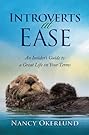
Nancy Okerlund (Introverts at Ease: An Insider's Guide to a Great Life on Your Terms, 2010): For years people encouraged me to write, but my response was always that writing for its own sake didn't seem to be in me. If I found something that seemed important to communicate, I might consider writing. Nine years ago I got passionate about being an introvert.

One day I thought to myself, Maybe I could write a book about it. It was a daunting thought, and a book seemed beyond my reach. But the possibility stayed with me and eventually I found your workshop at the Loft Literary Center in Minneapolis, "How to Plan, Write and Develop a Book."  

I came through it a changed person: I learned so much I felt like a book-writing insider!
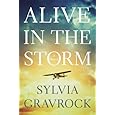
Sylvia Gravrock (Alive in the Storm, 2012): On a whim, in the summer of 2006 I packed up everything I owned and moved from Minnesota to Southern California. Not long after I arrived on my son's doorstep, two characters-Callie and Leo-suddenly took up residence on my shoulders. I could see them clearly, but I couldn't make them talk and couldn't make them go away. Five months later, I turned to an online writing class offered through the UCLA Extension program for help.

I didn't start out with the intent to write a book. I started taking writing classes with express intent to make these characters go away. One online class led to three. Four months later, when I still hadn't succeeded in finding employment in L.A., I took a job back in Minneapolis. I asked my online writing teacher if she could recommend a place in Minnesota where I could continue learning how to write.

She said, "You have one of the best places in the U.S. right there in Minneapolis. It's The Loft Literary Center."

After my move, I began exploring what The Loft had to offer. My characters were now talking up a storm, and I used their story to help me learn the craft of writing. I was fascinated to be learning something new again; and this approach to writing, using islands, fit the way my nonlinear brain functions.
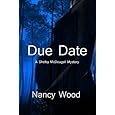
Nancy Wood (Due Date, 2012):I started this book almost six years ago. Before diving into the mystery genre, I had been working on a women's novel that focused on an open adoption and the relationship between the birth mother and the adoptive mother. When I took it to a publishing workshop, I learned how difficult it would be for me to publish this novel through traditional channels. It was a "quiet" novel, and I had no credentials, no MFA, no connections.

My goal had always been to publish commercial fiction. During the workshop, we talked about popular genres; mystery, of course, being one of them. With help from other participants, I ended up with a pitch for a mystery around adoption.

It was important to me to write this book for a few reasons. Though I don't have direct personal experience with adoption, I am fascinated with all the nuances of the complex relationship between a birth mother and an adoptive mother.  

Writing a mystery allowed me to continue to explore that relationship, but in a genre that was more marketable. I also wanted to see something that I had written as a published book!

Any advice to first-time book writers?

Sylvia Gravrock: Believe in yourself, your characters, and your ability. Take classes. Most importantly, don't be afraid to mine your deepest, scariest memories and emotions. Because I wrote Alive in the Storm with no intent that anyone else would ever read it, I could be honest with myself. The most common comment I've received since Alive in the Storm was published in May is that the reader feels engulfed in the emotions of the book. That, above all, feels like success to me. I'm overwhelmed with awe and gratitude. Sounds silly, but it's true.

Nancy Wood: Don't give up! Keep writing!  My other piece of advice is to read as much as you can in the genre you're writing in. Then re-read, studying how the author created the story. Call it research! I also found that listening to books, rather than reading them, was invaluable. As I listened to books, I often discovered nuances that escaped me when I was reading.

Nancy Okerlund: One resource that had a wonderful impact on me is Brenda Ueland's book If You Want to Write. After I read it I gathered up passages that particularly spoke to me and I still refer to them. She gives me permission to trust myself.

What's it like to have your book out there? What's the reader response so far?

Nancy Okerlund: It's been seven months since my book came out. I'm very happy about it. I see it as a contribution to the growing body of information about the power and beauty and importance of "introvert energy." Reader response has been very positive. Sales have been modest but steady, in this world of online book-buying. (Besides several local bookstores, Introverts at Ease is mainly available from Amazon.)  

Nancy Wood: I'm just a few weeks into this, so it's a brand new experience. The Solstice cover artist designed an eye-popping cover that I love seeing on my Amazon page! To top that off, my first Amazon review is a five star one, so I couldn't be happier. I have already connected with a few book bloggers for reviews and interviews. In truth, I feel like I'm walking on a cloud!

Any obstacles you encountered along the way?

Sylvia Gravrock: My biggest obstacle was forging time to write between work and personal commitments. I believed that writing was a "pastime," and as a result it was usually the last thing on my list. Even though it was the activity that gave me greatest pleasure (and still does), it always came in last. I needed a change in attitude.

Nancy Wood: I was my biggest obstacle--procrastination and doubt were my biggest challenges.

Nancy Okerlund: A series of serious illnesses and deaths in my family disrupted business as usual and at some point I officially let go of my intention to write a book. But my passion about introversion didn't go away. Then in 2007 I launched an electronic newsletter (ezine) called The Introvert Energizer. Every two weeks I'd write a short essay about what was happening in my introvert lab.  

I discovered it was a good way to crystallize my thoughts. It wasn't easy. It took the kind of musing, probing, mulling, wondering that introverts are known for. But I was getting grateful and interesting responses from my readers. And the ezine became a powerful structure for me. I felt so responsible to my subscribers that I'd manage to seek out my writing voice enough to meet my deadlines, even when I had to gnash my teeth in the process. I published it every two weeks for two or three years, then shifted into monthly. I continued to get encouragement about the writing. And I also continued to recognize how it kept me in a searching, observant place. And that I'd grown to like this way of writing: brief, self-revealing, informative pieces that almost always surprised me.
 
How did you land your publishing contract or make the decision to self-publish?

Nancy Wood: I'd finished another rewrite and really felt like I'd done everything I could. The manuscript was as polished and as strong as I could make it. I sent query letters to agents with very little response. I had a few nibbles that didn't go anywhere.  

I started looking online and found a marvelous array of Kindle books for $4.99, $3.99, $2.99. $0.99, and even free. I purchased some of them, read them, and was impressed with the whole package, from the cover to the story to the editing. I researched publishers, and found Solstice, a mid-sized publisher with a focus on e-books. I submitted the manuscript following the guidelines on the website, and was delighted 12 weeks later to receive an acceptance email, followed by a contract.

Nancy Okerlund: I chose to self-publish. I spent a year in a class, designed and led by John Eggen, which gave me another important structure, of support and of access to technical information and resources that further normalized producing a book. One of those resources was CreateSpace.com, the company I used to self-publish. I found it remarkable for its customer service, both online and by phone. I regularly had my questions answered skillfully within minutes of contacting them.

What was the biggest turning point in your writing process?

Nancy Okerlund: It was a conversation with an experienced publisher that got me back to my intention to produce a book. He assured me that my collection of short essays could become a book. I didn't believe him overnight. But once I did, I began to relate to the ezines differently and it was almost a pleasure to write an introduction for them. Because I'd published these pieces over five years in plain text email, I'd been minimizing their value as book material. But writing them was not a superficial process. And once I chose to believe the publisher, it felt like a miracle had happened: I'd let go of writing a book and then, years, later, it materialized right before my eyes!

Sylvia Gravrock: By April of 2010 I'd all but given up. Through your coaching, I'd come to see this story as a potential book, but I was hopelessly stuck and blocked. I hadn't written in weeks, and was honestly on the verge of saying, "Well, that was an interesting exercise. Time to leave this work behind and find the next adventure." (I'm a "starter;" I struggle to make myself finishing things.)

In one last effort to see if I would hang up this "writing thing" forever, I packed up my laptop and notebook and sat in a local Dunn Bros coffee shop. Staring blankly out the window and into a frosty spring landscape, I was disturbed by a woman suddenly standing right beside my table.

"What are you working on?" the stranger abruptly asked.

"Um. I'm writing a story ... a book." (Oh dear God, please make her go away.  
How rude of her to interrupt my mental block!)

"Really? What's it about?" She set her coffee cup down on the table, not about to move until I answered her.

"Well ... it's about a 10-year-old girl who is abducted, brutally raped, and left for dead." (How quickly can I spit this out so this stranger will just go away?)  

"Through the experiences of her own storms and trials, her grandmother realizes she's the only one who can reach her granddaughter and help her navigate the storm she's in to safety." (Whew! I said it. Will you just go away now??)

The stranger dropped her hands upon my table, stared straight into my eyes. "That's exactly what happened to me," she said in a hushed voice. "When will your book be published?"

Alive in the Storm was completed within the year and published as an ebook on May 9, 2012--two years nearly to the day from my encounter with a stranger in a coffee shop. I wrote it for this stranger.

Nancy Wood: When I was working with you, you introduced me to all the elements of a novel, from inner story to outer story. As a reader, I had always been able to sense when these elements formed a cohesive book, but I had never been quite able to translate them into my writing.  This was my turning point.   

What would you do differently, based on what you know now about book writing?

Sylvia Gravrock: I'm working on my second novel now. I've learned a lot but feel like I'm a novice all over again. This time, I'm using exercises from Your Book Starts Here and taking more writing classes with the intent for this book to not take five years and ten revisions. If it's possible, I'm being more methodical in my randomness.

Nancy Wood: I have always been a writer who needs to write from beginning to end. I need to know what I am writing about ahead of time. I need to know where the story is going and where to plant the clues. That hasn't changed. What has changed is how I approach each scene. I try to think of the inner and outer story as I write.  

Anything else you'd like to share with writers?

Nancy Okerlund: While we're socialized to believe the value of published work is in sales volume, my encouragement to other writers who are considering or in the process of creating a book is to trust that our voices join a conversation about life that reaches deep into our collective heart.   

To check out any of these books, click on the title below 

Alive in the Storm by Sylvia Gravrock
Due Date by Nancy Wood
Introverts at Ease by Nancy Okerlund 

Your Weekly Writing Exercise
1.  Think of a question you'd like to ask one or all of these writers.  Post it below.

Friday, July 6, 2012

When Nothing Is Happening . . .Why We Shy Away from Writing Good Conflict and What We Can Do about It


Many people shy away from writing good conflict into their books.  Either they avoid the external side of conflict by keeping events low risk, or they don't let the characters grow through internal realizations.   

Unless you have both external and internal conflict in your story, you won't build enough tension to capture and hold the reader.  And not enough tension usually means a "Thanks but not for us" letter from the publisher or agent you're hoping to charm.

This was verified for me years ago in a writing workshop taught by the editor of a famous literary journal.  Two elements stood out for me.

This editor received over 400 submissions each week.  (I can imagine that number has gone way up now.)  He commented on the stories and essays; accepted manuscripts ran a challenging gauntlet. 

Then he said this:  "Ninety percent of these submissions got rejected because nothing happened in the story."  That surprised me.

We discussed why.  Not enough good conflict, he said.  Or there was good internal conflict within the characters or narrator, but this conflict was not externalized.   So it was impossible to engage the reader. 

The writers, he said, needed to raise the stakes.

Raising the Stakes
A great way to raise the stakes in your story is to ask yourself two simple questions:

Who is this person fighting?    
What are they fight­ing for?

In other words:  What do they want, and what stands in their way of getting it?  

In fiction and memoir, characters want things.  A story is about the struggle to get this desire.  It could be the desire for freedom, to avenge a wrong, to secure a mate.  To make the story interesting, there must be a challenge.  If the desire is met without challenge, there is no good conflict.   

What about nonfiction?  This editor received many nonfiction pieces.  In nonfiction, there is conflict in the reader.  The writing must create a need in the reader, and a learning curve to satisfy that need.  A reader picks up your story because she has a question, a desire to learn something, for instance.  So the conflict presented in nonfiction is the effort to change or learn.

How do you raise the stakes?  Listen to John Truby, Hollywood screenwriting guru, who asks:  Who fights whom for what?   

If you can't answer the "whom" (the obstacle) or the "what" (the desired result), you don't have a good conflict.

Using the Storyboard W to Raise the Stakes
Storyboards are used by many publishers to check out this question.  If the stakes are high enough, when the story is mapped on a storyboard, you can see it immediately.

I use storyboards for all my books--fiction, memoir, and nonfiction.  I love the way they instantly tell me where my story slumps.   

(If you haven't yet seen my short video on storyboarding, check it out (click here) before you read on.  It'll explain a lot about the W and how to use it to raise the stakes in your story.)

One of my students, Matt, was working on his storyboard in class.  Matt was writing a thriller. De­spite a compelling plot idea, we could both see that Matt's storyboard fell flat.  We doublechecked each of his major plot points (the five points of the W structure of his storyboard), but only the first (triggering) event in chapter 1 had enough conflict.   

Act 2 was disturbingly peaceful for a suspense novel, causing the middle of Matt's book to really sag.
 
I suggested that Matt list the name of every major and minor player in one column. Next to each person's name, Matt would write down who this person was fighting and what they were fighting for, using John Truby's question.

It was surprisingly hard! Matt could answer these ques­tions only about his villain, his favorite character in the book. All the other characters, including the protagonist, came up blank.  

As we talked, I realized that Matt liked these characters way too much. He wasn't letting them get into trouble--or grow!  So he had no external conflict or internal conflict either.

I took a different tack. I asked Matt to scan the character list and begin pairing up characters as dance partners. Then imagine these two people having a conversation. What argu­ment could evolve? The goal was to leak out tiny moments of conflict.  

This exercise really worked. Conflicts started com­ing fast as Matt visualized these players tangling with each other as they danced a tango.

Externalize the Action
By asking Matt to create an external action--a dance--it became easier for him to imagine dilemma. This is because it's hard for the mind to sense dilemma if it's not dramatized, or made external. We learn about characters by watching them move around their worlds.  

Dilemma is rarely believable if it's passive--thought about, talked about, put in letters or emails, or discussed on the phone--without any active outer risk.

As you externalize the action in your book, you can complicate dilemma beautifully. You can see if there are any characters who are stalled between what they want and what they think they should have.  

A great example of this is Ann Patchett's award-winning novel Bel Canto, whose main character is a Japanese businessman who loves opera. For his birthday, he and other elite guests are invited to a private villa where a famous opera singer will entertain them. The busi­nessman is more than a little in love with this opera singer, but his desire to get closer to her is not something that can be realized unless some outside event happens, a dilemma that will force change--in this case a terrorist take-over of the villa during the recital. Once the businessman and the opera singer are trapped, more action gets externalized. He sees the opera singer ev­ery day, in difficult situations. Emotions begin to play out, because desires are spoken aloud. This is typical during trau­ma--witness the deep friendships and sudden romances of wartime.  

Patchett took characters who were safe in unex­pressed interior worlds and forced them into a dilemma in the outer world. If she hadn't, there would be no story.

What about Conflict in Nonfiction Writing?   
My student Carol is writing a self-help book for women who do too much. Carol's ideal reader is a generous soul, a people-pleaser who spends her days doing for others. Carol was like this too, and that's why she is motivated to write this book.

Carol's book contains some great anecdotes, as most modern self-help books do. For Carol's triggering event, she chose an embarrassing and true story of one of her clients who got "caught" tending to herself instead of a sick friend. The shame that resulted caused the woman to completely turn her back on her own needs for many weeks, until she got sick herself. Act 1 contained a series of stories like this, as well as good information about the mindset of people pleasers.

In Act 2, Carol's book slumped. She only had low-key scenes with little external action. It was pretty easy to build the rising action--stories about women who would simply sneak away by themselves to get some peace and privacy, hid­ing with a good book and glass of lemonade in their bed­rooms. But the falling action, which brought us to a bigger turning point, was more difficult.

I suggested Carol look for stories that showed a woman about to burst from being too contained for too long. Yes, the first story showed someone getting sick. Did Carol know of anything worse that had happened when needs were really repressed?

Carol thought of a story of her own: a serious confron­tation with a neighbor, who called Carol for a committee favor on a morning when Carol's son was suspended from school.  

She remembered how she blew up at the woman. Although it was embarrassing, it beautifully demonstrated what happens when two desires clash--the desire to main­tain the aura of being everyone's helper with the extreme need for privacy to cope with personal pain. When desires clash, there is surprise, drama, action.

Carol's willingness to include this "island" made a big difference in the overall depth and credibility of her book.  

If you're in a similar situation, take a clue from Carol's story. Don't feel your conflict has to be highly shocking to be ef­fective. It just has to be unexpected.  

"The important thing in writing is the capacity to astonish," says writer Terry Southern, a screenwriter who worked on films such as Easy Rider and Dr. Strangelove. Shock is "a worn-out word," wrote Southern, but astonishment always makes for good literature.

Your Weekly Writing Exercise 
1.  Make a list of potential conflicts that could be brought out in your book. What kinds of trou­ble could people get themselves into? If you’re writing fiction or memoir, list desires and dif­ficulties for each of your main characters. For nonfiction, make a list of possible problems that readers might encounter and how your book solves or addresses them.
2.  Pick one problem and write about it. See if you can create a scene where the person faces this problem.
3.  Now spend a few minutes with your writing notebook. Ask yourself how the conflict writing felt—did you notice anything in your own body as you wrote? Tense shoulders? Headache? Put those sensations into your characters. 

Friday, June 29, 2012

Get Real: How to Stop Dreaming about Your Writing and Actually Do It

In her brilliant memoir, A Year of Magical Thinking, Joan Didion describes the aftermath of her husband's unex­pected death, how she soothed herself with a year of magical thinking: aligning his shoes just so in the closet, ordering the bills in his wallet, in case he returned. A part of her believed these rituals and ceremonies would make the impossible come true: her beloved husband's death would be reversible.

In her memoir, Didion writes how her rational mind came up with rituals and superstitions and magical ideas to fend off going insane from the uncontrollable pain of grief.

Many writers resort to magical thinking when faced with pain in their book-writing journey.

This magical thinking surfaces whenever we feel over­whelmed by our own goals and expectations. Instead of ad­justing the plan or goal, we malign ourselves as bad writers. If you don't believe me, recall your last diet or exercise plan. Maybe you followed it perfectly for weeks. Then a crisis at home caused you to skip your workout or eat ice cream from the container.

"I've blown it big time, might as well stop," you tell your­self. And you stop. When the blocked day, week, or month leads to "I'm never going to get the momentum back, and I might as well stop now," this is also an alarm sounding.

Re­mind yourself that it's unrealistic to blame yourself that way. Unless everything is absolutely perfect, you're not going to be able to write your book? Not true. A functional writing life is about adjusting and accommodating, making changes as we go. It's not an all-or-nothing lifestyle.

A writer who successfully finishes a book expects and allows for the unexpected: getting a winter cold, kids home from school, the dog throwing up on a manuscript, computer glitches, frustrating delays in research.

Five Ways to Stop All-or-Nothing Thinking
These five simple steps work well to create balance, to overcome or outwit writer's block.

1. Embrace Creative Multi-tasking
Multi-tasking has gotten a pretty bad rap. Legions of burnt-out high achievers of the eighties and nineties lived on the adrenaline high of multi-tasking and it will certain­ly wear out anyone if it becomes a habit.

But I discovered it brings welcome stimulation and perspective and lets me avoid the all-or-nothing syndrome. I just train myself to jump subjects.

I learned this in one of my painting classes, when I was struggling with a still life I wanted to kill. Nothing was work­ing; everyone else in the class seemed to be doing beautifully. I happened to be standing next to an empty easel, so I moved my still-life-in-progress to it and started a new painting.

When I took a break, the abandoned still life caught my eye. Suddenly, because I hadn't been glaring at it for hours, I saw what it needed.

I spent the rest of the class toggling between them and produced two good pieces. When I paint at home now, I of­ten set up two canvases at once. My two easels, side by side, let me get unstuck. I switch often. When I come back to the other canvas, the break has refreshed my eye. I see with new enthusiasm the subject that bored or frustrated me minutes before. I now do this with my writing.

I open two documents on my computer and toggle back and forth. While my mind's solving one problem, an idea comes for the other piece. Toggling from a freewrite to a revision keeps me engaged, surprisingly alert, and free of magical thinking.

2. Flex Your Routine
Writers who completely avoid structuring their writing time often never complete their books. There's a deep fear of routine in many creative artists.

No one stays the same throughout the long process of writ­ing a book. Assume you are going to change as a writer. Make your writing structure flexible enough to change as you do.

When I first began writing seriously, routine caused me great anxiety because I thought I had to stick with plans. I thought routine was terribly uncreative-what if an intrigu­ing detour emerged? Could I follow it and still produce a finished piece of writing? Now I know detours are often helpful, but only within a dependable routine to reorient me when I need to remember my original purpose for writing.

I now hold a loose structure around each writing ses­sion, showing up for my planned time, producing pages, re­viewing my goals. I'm now willing to stay committed, but also willing to vary my routine.

3. Use Your Life
A New Yorker cartoon shows a man sitting on a screened porch in front of a typewriter. Crumpled pages litter the floor. Everywhere are dogs--big dogs, tiny dogs, panting dogs, sleeping dogs. The writer's wife stands in the doorway to the screened porch, hands on hips, exasperated at her ob­viously blocked spouse.

"Write about dogs!" she tells him.

What's on your plate? What are you grappling with right now in your life? Maybe you can use it to unlock the block, get you back on the page. Writing about the ordinary, the life in front of you, will help you reconnect to yourself, restore inner balance, and get you back to your book.

4. Force Yourself to Have New Experiences
The opposite of fear of routine is obsession with it. If we're not writing, the job is to write regularly. If we are writ­ing about the same stuff, we could be caught in a rut. Too much repetition can lead to creative blocks.

If this happens, you need to (1) recognize it, and (2) force yourself to go out into the world so you have something new to write about.

When I am repeating myself, it may be that the well has run dry. Or life has become too fast to look deeply. I'm living on the surface without time to think, to find the original in myself.

Julia Cameron's The Artist's Way suggests a choosing brand-new place to go for an hour, solo. Use the time to fill the creative well, open yourself to new experiences, expose your senses to something that nurtures in a new way.

Cameron spoke of how regular creative outings were the hardest task she proposed in her book. People loved writing morning pages, doing the other activities, but resisted these dates with their inner artist. Exposing yourself to something completely out of your normal life or to your own inner life-without the speed of distracting activity-can be frightening, but things held at bay suddenly come forward. In a good way.

Some outings to consider: visit a new museum, take a walk in a never-explored neighborhood, go for a hike.

5. Keep Filling Your Well
The writing life requires intimacy with your own self. Intimacy is about getting close and letting go of what stands between you and your subject.

If your writing feels repetitive or dried up, if you aren't writing regularly, consider the level of intimacy you have with your book topic. Are you bored with it? Is it connected with your life?  

Consider filling your well.

I polled published authors: how did they fill the well? Many suggested activities fostering internal slowness.  

Your Weekly Writing Exercise
1.  For thirty minutes or so, write about your per­sonal life in each of the areas below. Consider your minimum requirements to feel happy, bal­anced, and healthy. How are you doing in each area? Add any others that are essential to your well-being.
 
physical (getting enough sleep, regu­lar exercise, eating good food, keeping healthy)
emotional (time for relationships with your family and friends, enough self-care, enough private time)
job/finances/career (meeting your work commitments, bringing in enough money, keeping up with your savings goals)
creative life (learning and growing, explor­ing creatively, staying current with your interests)
spiritual (practicing your faith, having enough private time with yourself, serv­ing in your community)

2.  Take twenty minutes to explore what you need to have in your life, to get your book written.
privacy
time
feedback
supplies
resources
good, working equipment
flexible schedule

3.  Compare the two lists. Does one neglected area on the life list also show up in the writing list? For example, no privacy?

4.  Starting small, choose one area from the life list and one from the writing list that could improve.

5.  This week, begin one small change.