Thursday, March 24, 2011

Writing More Vivid Characters--Borrow a Technique from Alec Guiness

This week, I'm going to share a technique I teach in my workshops on writing vivid characters.  If you're interested in learning more, you're welcome to join me on Monday, March 28, 1:30-4:30 p.m., at the Hudson Valley Writers' Center in Sleepy Hollow, NY (Westchester county near NYC), for an afternoon workshop on writing strong characters.  The cost is $60 and you can register by calling the Writers' Center at 914-332-5953.

I was struggling with dilemma in my second novel when

Saturday, March 19, 2011

Wisdom from a Writing Master--Barbara Kingsolver on Her Writing Practice

A student in my online class shared this wonderful interview with Barbara Kingsolver from Kingsolver's website, and it has helped me through a tough writing week.  I admire Kingsolver's no-nonsense approach to the artistic life, and she has great tips on how to keep writing.

This week's writing exercise is to enjoy the article, and post your comments and insights. Click on the link below (Interview with Barbara . . . )


Interview with Barbara Kingsolver on Writing

Saturday, March 12, 2011

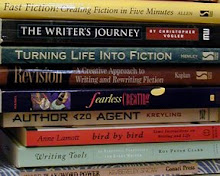
Good Books for Learning Different Writing Skills

For several years I worked via email with a small group of new book writers.  I'd just graduated from my M.F.A. program and I wanted to see if others would learn as much as I did from reading certain books.

One of the writers, working on his first novel, emailed me after our first year.  He had compiled my list of recommended books by what he'd specifically learned from each--about aspects of

Sunday, March 6, 2011

Reading to Become a Better Writer

This past weekend I was reminded of the joy of reading good books.  This reminder came unexpectedly, via a small New England writing conference called Writer's Day, hosted by New Hampshire Writer's Project.

I've attended Writer's Day for two years.  Two hundred writers from all over New England gather each spring for really good workshops, intense networking, pitch sessions with agents and publishers, and a stellar keynote speaker.  Each time I go, I am impressed with

Sunday, February 27, 2011

Wise Words about Passion in Writing

One of my students alerted me to this excellent NPR review of Stanley Fish's new book, How to Write a Sentence.  But even more fun is the excerpt from the book, which is below the review.

I'm posting the link here (click on the words "NPR review" above), to share with you one writer's passion for writing.  It inspired me to read it, and I hope it'll ignite your own passion for your words, sentences, paragraphs, and pages.  So for this week's exercise, enjoy this excerpt from How to Write a Sentence.  Maybe go out and buy or borrow the book.

Then spend some time reflecting on your passion for words.

Do you swim in the joy of them, as this writer does?
Why or why not?

Sunday, February 20, 2011

Writing Dialogue: How People Really Talk on the Page

A friend recently sent me this wonderful article, published in the Wall Street Journal's Wordcraft column, about how people really talk on the page.  I like this column, I'm more impressed with the WSJ since it began including it to its usual lineup.  The article is short, like all of the Wordcraft essays, but gives good food for thought.

So many writers in my classes have questions about how to write dialogue.  It truly takes

Monday, February 14, 2011

Weeding through the Mess: How to Make Sense of Your First Draft

A reader from New York has been working hard on her first draft of a novel for over a year.  First drafts aren't easy.  Initially they require sitting down and writing a lot.  Not necessarily from chapter 1 to The End, but a lot of scenes need to accumulate.  This is the benefit of writing classes, writing marathons, and writing practice.  This is why Nanowrimo is so popular.  You can accumulate pages toward this first draft.

But after all the pages are written, you

Friday, February 4, 2011

Storyboarding--Using the W Storyboard Structure to Chart Stronger Conflict in Your Book


With the help of one of my students and the Loft Literary Center in Minneapolis, I created the video below.  Watch it to learn how to use the W storyboard structure to create a strong emotional arc in your book, via stronger conflict.

Enjoy!


Interested in learning more?  I'll be teaching storyboarding in two-day workshops this spring:


Saturday/Sunday, April 9-10, at Southern New Hampshire University, sponsored by NH Writers' Project.  For more details visit www.nhwritersproject.org.

Friday/Saturday, May 6-7, at the Loft Literary Center, Minneapolis, www.loft.org or call 612-379-8999 for details.

Saturday, January 29, 2011

How to Work with the Four Levels of Transition in a Book: Smoothing the Reader's Ride

Successful transitions allow a reader to move through your book, from beginning to end, without getting frustrated or bored.  Or taking two steps back to reread something that wasn't clear.  But transitions are the last thing we think about when we're creating our books.  It's only when we read the manuscript at draft that we discover awkwardness, sections that jump around, or are too fast or slow.

How does a writer craft good transitions?

Saturday, January 22, 2011

Finding Creative Balance: Making Room for Your Writing in Your Life

Years ago, I gave up on New Year's resolutions.   Lots of people promised themselves the moon, but everything fell back into stasis by February.  Me too, back then.  I couldn't ever figure out how to make real, lasting transitions from what I was to what I wanted to become.

But I am still attracted to the possibility of change, especially in my creative life.  So I love