"Start with a big love of words, add a generous helping of Mary Carroll Moore, mix with leavening from your peers, knead vigorously, and voila! Your book has risen!" --Eric Utne, founder of Utne Reader and author of Far Out Man (2020).
WINNER! 2011 NH Literary Awards--Reader's Choice Award
“The endeavor of writing can be long and lonely. Mary Carroll Moore, master writing instructor, to the rescue! Moore packs How to Plan, Write, and Develop a Book with years of gritty good sense and big-picture perspective. Her techniques for drafting, organizing, and polishing a book are practical and time-tested. Here is a first-time book-writer’s best companion.”
--Elizabeth Jarrett Andrew, author of Writing the Sacred Journey: The Art and Practice of Spiritual Memoir
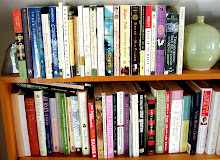
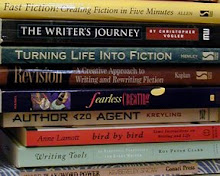
My Favorite Writing Books
A Writer's Time by Kenneth Atchity
Bird by Bird by Anne Lamott
From Where You Dream by Robert Olen Butler
On Writing by Stephen King
Reading Like a Writer by Francine Prose
Story Matters by Margaret-Love Denman and Barbara Shoup
Tell It Slant: Writing and Shaping Creative Nonfiction by Brenda Miller and Suzanna Paola
The Art of Slow Writing by Louise DeSalvo
The Art of Time in Fiction by Janet Silber
The Passionate, Accurate Story by Carol Bly
The Situation and the Story by Vivian Gornick
What If? by Pamela Painter and Anne Bernays
Word Painting by Rebecca McClanahan
Writers Dreaming by Naomi Epel
Writing Fiction by Janet Burroway
Writing Tools by Roy Peter Clark
Writing in General and the Short Story in Particular by Rust Hills
Sample Writing Exercise from My Online Classes: Dialogue with Your Book
Pretend you’re a reporter for the New York Times. You’re going to interview your book idea.
List some questions you’d love to ask your book about its form, content, goals. You can start with something nonthreatening, as you would if you were a real reporter.
Ask your book some very good questions. Some ideas from my class are below, or you can make up your own:
What do you want to tell me about yourself? What form suits you best? Who is your readership and how will they access you? What are you most eager to say? What are you most afraid to say? What genre are you?
Imagine the book answering you. Write everything down--no matter how odd, silly, or irrelevant it seems.
When it runs out of things to say (or you get nervous about the answers) ask a different question.
The goal of this book-writing exercise is to surprise yourself. You’ll tap the hidden parts of yourself as a writer, the parts we often censor. You can strike gold--if you maintain the attitude of no-assumptions and anything can happen.
Books for the Blocked--These'll Get You Moving Again!
Escaping into the Open by Elizabeth Berg
Listen to Me by Lynn Lauber
Marry Your Muse by Jan Phillips
Pencil Dancing by Mari Messer
The Art of Slow Writing by Louise DeSalvo
Thinking about Memoir by Abigail Thomas
Write Your Heart Out by Rebecca McClanahan
A person’s life purpose is nothing more than to rediscover, through the detours of art, or love, or passionate work, those one or two images in the presence of which his heart first opened. Albert Camus
Simone de Beauvoir once wrote, "Every time I start on a new book, I am a beginner again. I doubt myself, I grow discouraged, all the work accomplished in the past is as though it never was, my first drafts are so shapeless that it seems impossible to go on with the attempt at all, right up until the moment . . .when it has become impossible not to finish it."
This comes from her1965 book Force of Circumstance, which is one of many published works during her long literary career. New book writers might read this in astonishment. How come such a prolific and experienced writer had such beginner's emotions?
Just wanted to say thanks for writing books that share your passion with the world. Seems appropriate on this Thanksgiving week to post this wonderful article by Derek Sivers.
This month I've taken on an insane project--which I try to do each November. I've signed up for National Novel Writers Month, or nanowrimo as it's affectionately called by those who know and love it. Each year, hundreds of thousands of writers from around the world log on to the www.nanowrimo.org site and commit to writing 50,000 words in 30 days. That's about 1667 words a day, give or take a few.
I was given the news by the editor at my publishing company. It was a shock, even in these shocking times in publishing. "We only read the first two pages of chapter one," she said. "If it doesn't grab me, it doesn't get further."
What intense pressure for writers these days! To craft a chapter one that
A good writing friend once shared this piece of wisdom: Sometimes we have to get small to get big, with our books. Books span large areas of time and space, and it's easy to get lost in the expanse of them, overwhelmed with all the details.
In my writing classes, I use two fun exercises to help writers manage the immensity. One exercise is a poem, the other is an exploration of one of your main characters, your narrator, or your potential reader, by putting them in a five-page short story.
These two exercises are such fun, they can feel like a sidetrack away from the "real" writing.
Publishing is changing so fast, it's hard for writers to keep up with the shifts. A friend sent me this wonderful article from author Steve Pressfield's site, "What It Takes," featuring publishing-savvy Shawn Coyne talking about the profit and loss analysis that publishers make before accepting a manuscript. Fascinating to hear the inside scoop.
If you're game, educate yourself this week. Scroll down to his article, "A Matter of Infinite Hope."
A good friend just recommended, and another just purchased, the most beautiful writer's notebook, so I am posting this article from two years ago about how to use them to the fullest as you create and craft your book. If you'd like to salivate along with me, check out the Leuchtturm writing notebooks. I'm off to order mine right now.
Writers produce writing. And if you're a writing geek like me, you love to write longhand in notebooks, not just on the super-fast computer.
Writing notebooks let the right brain ramble slowly, and the writing I do longhand is often pensive, full of imagery. I notice things I'd breeze over. It has a certain
Today it is wet outside, the start of our fall rains. Everything looks saturated with September sun and now the moisture of this gentle rain, and it's a good day for sitting still. Something I don't do very often, but which my books crave at this time of year, as the heat of summer downshifts into colder weather.
Today I'm giving myself the gift of visioning. Simply listening, and waiting. Visioning brings
A common question in my book-writing classes is the difference between chapters and scenes. Both are pathways, bridges between one moment and the next. But what makes a chapter work? What makes a collection of scenes warrant it
Storyboards, the visual map that filmmakers use, save my books. They are my primary pathway through my piles of material. They are my best tool for organizing and structuring my novels, nonfiction books, and memoirs so that a reader can make sense of the story.
I love them. I couldn't make publishable books without them.
I also hate storyboards. They are like bossy mother-in-laws, telling me what I'm doing wrong. They point out exactly what I don't want to look at about my book-in-progress: where I have too much blah-blah-blah, where I've skipped a juicy opportunity for conflict, where I've stayed on track or gone on a tangent.
Essentially, it becomes clear as day where my book isn't yet working.
I teach storyboards, I have several hanging on my office walls, and I barely tolerate their linear know-it-all attitude. But I think they're gold.
The Golden Opportunity of Storyboards
A big question as you begin your book is this: How are you going to know if your story flows when it's outside of your own inner worlds?
You can craft a draft, of course. Get it typed out and printed, read through it. But it's still hard to see if the idea you presented on page 31 will thread through to page 231 in a way your reader will track.
Some writers make long lists. I do this too. Facts to check, threads to follow. The lists on my desk are as numerous as my printed drafts, after a while, and I start to go crazy under all that paper. Here's where storyboards present a golden opportunity, like a good map out of a swamp.
A writer needs to know the structure of her story flow, the placement in time and space of each idea or plot point. It's not just enough to churn out the words. The sequence matters, a sequence that readers can follow, and you need some method to clearly see sequence. Filmmakers use storyboards to provide this.
What's a storyboard look like? Check out this video where I demonstrate a storyboard.
Mary Carroll Moore is an award-winning, internationally published author of thirteen books in three genres, writing teacher, editor and book doctor for publishing houses. For thirty years she's helped thousands of new and experienced writers plan, write, and develop--and publish!--their books.
Follow This Blog! Email Mary at mary(at) marycarrollmoore.com or cick below
If you believe you have a book inside you just waiting to come out, here is a guide that will ensure your book’s arrival in the world. In clear, accessible prose, Mary Carroll Moore leads the aspiring author through every step of the challenging, rewarding process of developing and completing a full-length book.
--Rebecca McClanahan, author of In the Key of New York City
Encouraging Words--Well-Known Writers with Large Number of Rejections--But Published!
Because of Winn-Dixie by Kate DiCamillo--397 rejections (and it became a movie) A Wrinkle in Timeby Madeleine L'Engle--97 rejections (and it won the Newbery Medal for best children's book of 1963; it's now in its 69th printing) Cinder Edna by Ellen Jackson--40 rejections (and it has won multiple awards and sold 150,000 hard copies). Judy Blume says she received "nothing but rejections" for 2 years. Princess Diaries by Meg Cabot--17 rejections Harry Potter novels by J.K. Rowling--rejected by 9 publishers The Diary of Anne Frank--16 rejections (and now more than 30 million copies are in print) Dr. Seuss books--more than 15 rejections Jonathan Livingston Seagullby Richard Bach--140 rejections Gone with the Wind by Margaret Mitchell--38 rejections Watership Down by Richard Adams--26 rejections Dune by Frank Herbert--nearly 20 rejections
To all book writers: Believe in your story. Keep trying. The right home for your book is out there, waiting for you to discover it.
Book writers (and any writers) need to know how to engage the creative right brain that "writes" in images. Think of any wonderful book that's left you swimming in a setting or characters--the writer has successfully used the image-creating part of the brain. But our normal workaday lives short-circuit this part. Check out this cool video of Dr. Jill Bolte Taylor, a brain scientist at Harvard Medical School, recounting her personal experience of a left-brain stroke and her awakening to right-brain reality. Pretty amazing fusion of brain science with what it feels like to a brain scientist having a stroke: http://www.ted.com/talks/view/id/229
Flying Squirrels Bring Creative Jolt to Novelist
Flying squirrel gets into house--disrupts routine, gets novelist thinking differently. This happened to me! For two days, as I chased the squirrel (actually, it was all night since they are nocturnal), I slept very little. And got many new ideas for my novel-in-progress.
Go figure!
Maybe...book writers need creative jolts? Routine dulls our imaginations?
How has an unexpected interruption actually been a gift for your creativity this week?
At the Loft Literary Center, I can always tell which students in my classes have taken Mary Carroll Moore’s class on book-writing. They talk about writing their book in "islands" and using storyboards to figure out how those sections relate to each other. When another student confesses to feeling overwhelmed by the material her memoir might include, they readily advise, “You should try Mary Carroll Moore’s method.” I second that. --Cheri Register, author of Packinghouse Daughter and American Book Award winner
Copyright Protection If you are a copyright owner of any unattributed image or text on this blog, send me an e-mail and I will remove it or give you credit, whichever you prefer.




 Posts
Posts