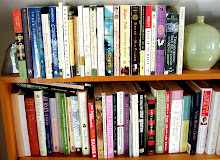
Writers can write anywhere--right?
If
you're really creative, you don't need a specific space, a writing
room, or even a desk of your own. With our iPads and smart phones and
laptops, our writing can be truly portable.
We don't need to worry about finding a special spot to grow our books.
Right? For me . . . Wrong.
Maybe
when we're dabbling, maybe when we're still in the exploring phase, we
can disregard the idea of having a "room of one's own," as Virginia
Woolf famously said.
But like the difference between a date and
a marriage, books are a long-term commitment to your creativity, and
they will thrive if we give them a sacred space to grow. This is
something I've known for a long time, but I had to relearn it recently.
Friday, May 10, 2013
Friday, May 3, 2013
Atina Diffley, Susan Hodara, Rachael Hanel, and Eric Utne--Four Great Writing Tips from Four Memoirists
Atina Diffley is the author of the Minnesota Book Award-winning memoir, Turn Here Sweet Corn: Organic Farming Works (University of Minnesota Press). Susan Hodara is one of the authors of the recently released Still Here Thinking of You: A Second Chance with Our Mothers (Big Table Publishing) and a journalist who covers the arts for New York Times and other publications. Rachael Hanel is the author of We'll Be the Last Ones to Let You Down: Memoir of a Gravedigger's Daughter (University of Minnesota Press) and twenty other books. Eric Utne is the founder of Utne Reader and is currently writing memoir for Random House with the working title Confessions of a Constant Seeker (on sale fall 2014).
I asked each to share their favorite writing tip--something that has helped them during the process of writing their books. They came up with four very different approaches (no surprise) and quite useful techniques for book writers at any stage.
Please check out their writing and enjoy their writing tips this week!
Friday, April 26, 2013
Update on Publishing Today: Interview with Nonfiction Authors Linda and Allen Anderson
Linda
and Allen Anderson have an illustrious career as co-authors of fifteen
nonfiction books, most recently the ASJA-award-winning memoir, A Dog Named Leaf.
They both teach writing classes and work (Linda, full-time; Allen,
part-time) on their current and future books--writing, editing, and
marketing.
With positive reviews from Publisher's Weekly, Library Journal, Country Living, Cat Fancy, Best Friends, plus dozens of other national publication, the Andersons' books have been listed in amazon.com Hot 100 and Barnes & Noble Top 10, What America Is Reading.
Celebrities Tippi Hendren, Valerie Harper, Brian McRay, Dr. Bernie Siegel, Betty White, Dr. Larry Dossey, Penelope Smith, and Richard Simmons are a few who have endorsed or contributed stories to the books.
The Andersons' work has been featured twice on NBC's The Today Show and on ABC's Peter Jennings Nightly News, and they have been the subject of numerous national magazine and wire service articles, including interviews for London newspapers and the BBC.
With positive reviews from Publisher's Weekly, Library Journal, Country Living, Cat Fancy, Best Friends, plus dozens of other national publication, the Andersons' books have been listed in amazon.com Hot 100 and Barnes & Noble Top 10, What America Is Reading.
Celebrities Tippi Hendren, Valerie Harper, Brian McRay, Dr. Bernie Siegel, Betty White, Dr. Larry Dossey, Penelope Smith, and Richard Simmons are a few who have endorsed or contributed stories to the books.
The Andersons' work has been featured twice on NBC's The Today Show and on ABC's Peter Jennings Nightly News, and they have been the subject of numerous national magazine and wire service articles, including interviews for London newspapers and the BBC.
Friday, April 19, 2013
Seth Godin's FOMO--Fear of Missing Out: Jealousy and How It Affects the Creative Person
Way back when I was new to writing, I did an exercise from Julia Cameron's classic, The Artist's Way, called The Jealousy Map.
Cameron worked for years with what she called "recovering artists," or writers, musicians, and other creative folk who were stalled out, not doing their art. She proposed that jealousy often blocked us from reaching our fullest potential. This translated into a kind of creative self-abuse. Our Inner Critic got out of hand.
The Jealousy Map asked you to write a fast list of everyone you were jealous of. From the local writer who just got a story accepted to your neighbor who was so creative to the last winner of the Pulitzer Prize.
I went wild. I had no idea how much jealousy lurked inside me! My best friend, members of my writers' group, luminaries like Pam Houston (a short story writer I adored), and others got scribbled onto my paper. Anyone I felt was "chosen" in some way, while I was not.
Many on my list reflected areas where I felt less competent. I envied writers with better skills and a longer track record in publishing, thinking it was luck that got them there. I didn't know better.
The exercise was cathartic. By the end, I was quite ashamed! What a terrible, mean-spirited person I was. To be so envious of these other writers' well-deserved accolades and successes.
But the exercise wasn't over.
Cameron worked for years with what she called "recovering artists," or writers, musicians, and other creative folk who were stalled out, not doing their art. She proposed that jealousy often blocked us from reaching our fullest potential. This translated into a kind of creative self-abuse. Our Inner Critic got out of hand.
The Jealousy Map asked you to write a fast list of everyone you were jealous of. From the local writer who just got a story accepted to your neighbor who was so creative to the last winner of the Pulitzer Prize.
I went wild. I had no idea how much jealousy lurked inside me! My best friend, members of my writers' group, luminaries like Pam Houston (a short story writer I adored), and others got scribbled onto my paper. Anyone I felt was "chosen" in some way, while I was not.
Many on my list reflected areas where I felt less competent. I envied writers with better skills and a longer track record in publishing, thinking it was luck that got them there. I didn't know better.
The exercise was cathartic. By the end, I was quite ashamed! What a terrible, mean-spirited person I was. To be so envious of these other writers' well-deserved accolades and successes.
But the exercise wasn't over.
Friday, April 12, 2013
Making It Up versus Imagining It--Notes from Andre Dubus
Like
you, I love good writing. I adore books that let me enter a dream
world and only surface reluctantly. As a writing teacher, I study such
books to find out why they hold me so completely. The best of the best
get reserved for my workshops as teaching tools.
At my Madeline Island retreats each summer, we read sections from Andre Dubus's award-winning novel, House of Sand and Fog, particularly a pivotal scene that takes place in a revolving restaurant in San Francisco.
Dubus chose the setting first, he told me at a writing conference in Manchester, New Hampshire, this past weekend. He started with the revolving rooftop location and then built the event around it. The event he chose perfectly reflects the disorientation of watching a cityscape go by. The two main characters are revealing unsavory truths to each other, making a pact, about to get into trouble. The scene even foreshadows a crime they will commit together at the end of the story.
At my Madeline Island retreats each summer, we read sections from Andre Dubus's award-winning novel, House of Sand and Fog, particularly a pivotal scene that takes place in a revolving restaurant in San Francisco.
Dubus chose the setting first, he told me at a writing conference in Manchester, New Hampshire, this past weekend. He started with the revolving rooftop location and then built the event around it. The event he chose perfectly reflects the disorientation of watching a cityscape go by. The two main characters are revealing unsavory truths to each other, making a pact, about to get into trouble. The scene even foreshadows a crime they will commit together at the end of the story.
Friday, April 5, 2013
The Art of Modeling--How Other People's Books Can Make Yours Better
When
I was in graduate school, one of my teachers suggested a sketchy idea:
Read a favorite published writer and "model" them.
She suggested it because I was way stuck--in a (to me unsolvable) problem with one of my chapters. It needed a lot less imagery. I love imagery. So me and the chapter were at a standstill. I was at a loss: how to capture necessary emotion without the pictures?
Luckily, my teacher was a minimalist writer. She was famous for this in her novels and short stories. I loved them but they were like a foreign language. She answered my dilemma with a list of books to find and read.
Like her writing, most of the writers on the list were also minimalists. A few occasional visual or sensory details. Imagine Old Man and the Sea but in modern prose. Sentences short and to the point, characters who didn't mess with thoughts or reflection.
She suggested it because I was way stuck--in a (to me unsolvable) problem with one of my chapters. It needed a lot less imagery. I love imagery. So me and the chapter were at a standstill. I was at a loss: how to capture necessary emotion without the pictures?
Luckily, my teacher was a minimalist writer. She was famous for this in her novels and short stories. I loved them but they were like a foreign language. She answered my dilemma with a list of books to find and read.
Like her writing, most of the writers on the list were also minimalists. A few occasional visual or sensory details. Imagine Old Man and the Sea but in modern prose. Sentences short and to the point, characters who didn't mess with thoughts or reflection.
Friday, March 29, 2013
Co-Authors? How Successful Are Partnerships on Books--and What Are the Pitfalls to Watch Out For?
When my first book was contracted by a publisher, I was assigned an editor who also wrote for Men's Health
magazine. This editor, being a writer too, knew how scary it was to
have a first book. I knew very little about how to structure a book; my
editor showed me the ropes.
Not long after that book got published, I got a call from the same editor. Would I like to partner up with him on authoring another book?
We proposed a topic that we were both passionate about. An agent got interested and we signed a contract.
The agreement for our co-author partnership was very like our author-editor relationship for my first book. I would provide the "talent" or the content. My co-author would help me shape it. It was a journey we'd travel together--one of us deciding where to go, the other deciding how.
Not long after that book got published, I got a call from the same editor. Would I like to partner up with him on authoring another book?
We proposed a topic that we were both passionate about. An agent got interested and we signed a contract.
The agreement for our co-author partnership was very like our author-editor relationship for my first book. I would provide the "talent" or the content. My co-author would help me shape it. It was a journey we'd travel together--one of us deciding where to go, the other deciding how.
Friday, March 22, 2013
All about Publishing Excerpts from Your Book to Build a Platform: An Interview with Memoirist Mary Collins
I met Mary Collins in a workshop I taught at Grub Street
writing school in Boston a few years ago. Her writing--and her
enthusiasm--stayed with me. I was fortunate to have Mary join me again
in an online class later that year and a weeklong retreat on Madeline Island in the summer.
I
watched her memoir take shape, change, and reform. She is writing
about her growing-up years in England, and her brother's untimely death.
Recently, Mary was honored by the illustrious Brevity magazine when "Leap," an excerpt from her manuscript won second-place and was published by Brevity. You can read it here.
I
knew Mary was keenly interested in getting her work out there, to
build name recognition and a platform before her memoir is finished.
Here's an interview with Mary, explaining her unique way of approaching memoir and how she won the Brevity contest.
Friday, March 15, 2013
Five Common Obstacles to Finishing and Publishing Your Book
Choosing
vulnerability in your writing. Always being open to learning more.
Embracing the support of a writing community. Being willing for writing
to be a priority. Knowing how to break a project into steps to keep
from being overwhelmed.
Sounds like a magic formula? It is. But more, it's a toolbox of skills and choices that professional, published writers use to get a book project finished.
They're
not the same skills as writing great dialogue or crafting a strong
plot. But without them, there's little hope that your book will be
published today.
Obstacles to these skills are below. Read on.
Friday, March 8, 2013
Most Amazing Guide to Self-Publishing: A.P.E. (Author, Publisher, Entrepreneur)
Most writers know at least one self-publishing success story. A famous one, almost an urban legend by now, is the story of Amanda Hocking,
of Minnesota. She needed a couple hundred dollars one day, so she
decided to self-published her paranormal romance. In twenty months, she
sold 1.5 million copies of her e-book and made $2.5 million. Not only
that, but she signed a huge deal with St Martin's Press.
Self-publishing used to be called "vanity press," because only the vain would consider it. Now it's earning more and more respect from both authors and publishers. Agents regularly scout the self-published books on amazon.com to find new authors who are making it big there.
My indie-released songwriter friends never understood why writers are so hung up about self-publishing. Musicians have long separated from the labels and ventured out on their own, releasing their own CDs and working with indie distributors like cdbaby.
Now, everything has changed--and we'll never go back, I believe.
This allows writers much more freedom and many more options. It's all good news for us.
Subscribe to:
Posts (Atom)