Hard to believe, but 2020 is almost behind us.
Quite the year. If your writing has benefited from the retreat of forced isolation, you're one of the fortunate ones. Others, I know, felt too flat with exhaustion and worry to nourish any creativity.
Looking back, it took me to midsummer to regain my stride. Changes in my work life from suddenly teaching on Zoom took vast amounts of learning and preparation time I hadn't planned for. I had to revamp all my class materials--not a bad thing, in the end. But it ate into my writing time.
I had to lean heavily on my writing partner and writer's group to get started again--we were all in similar places, so we helped each other.
Friday, December 4, 2020


Monday, November 23, 2020
Fostering Gratitude for Your Writing in Uncertain Times
Two of my private clients emailed me this week, saying they hated their books. I don't usually hear such strong statements, especially from experienced writers as these. But life, not just the books, had worn these two writers out. Family illness, the spread of covid, exhausting politics, and dread of winter combined with difficult revision tasks put them over the edge.
It wasn't that they really hated their books--I knew that, I'd read both manuscripts, and they were good ones.
It wasn't that they really hated their books--I knew that, I'd read both manuscripts, and they were good ones.
Wordsmithing the Heck out of Your Revision--Ten Steps to Make It Shine
After the gathering stage, after the storyboarding and brainstorming your book's flow, after the first and tenth drafts are created, comes wordsmithing.
Wordsmithing is the final craft we book writers need to have in our toolbox. It's what makes the actual writing shine and sparkle.
Without the other steps, though, it's a wasted effort. I often think of it like putting curtains up on a framed house--window holes but no walls. The framing needs sheet rock, mudding and taping, sanding and painting, and glass in those windows, before the curtains go up.
Wordsmithing is the final craft we book writers need to have in our toolbox. It's what makes the actual writing shine and sparkle.
Without the other steps, though, it's a wasted effort. I often think of it like putting curtains up on a framed house--window holes but no walls. The framing needs sheet rock, mudding and taping, sanding and painting, and glass in those windows, before the curtains go up.
Friday, November 6, 2020
How to Send a Manuscript to an Agent--and What to Expect Once You Do
If you've been writing like crazy during the past months of isolation, you may be ready to send your manuscript off to an agent or two in the new year. One of my long-time students is in that scary and exciting place, and she asked for any tips on how to go about it.
(I've written in many past blog posts about how to know if you're really ready. You can search for them on my blog if you want to read them again. Enter "manuscript" or "agent" in the search box.)
(I've written in many past blog posts about how to know if you're really ready. You can search for them on my blog if you want to read them again. Enter "manuscript" or "agent" in the search box.)
Friday, October 30, 2020
Writing Real-Life Characters: How to Get to Know the People You Already Know
I got an email from one of the students in my last online Afternoon Character Intensive. Since the workshop, he'd had a mini-breakthrough about his memoir--specifically the cast of characters he's trying to include. His mixed-up, even dangerous, family history means the players onstage are very individual, with quirks and tendencies. But he knew them so well, he'd not written that individuality onto the page.
It was hard enough coming to terms with their effect in his life. He wanted to write what happened, not who done it.
But he also knew that characters in memoir must be memorable--as memorable as those in a good novel--for readers to really grasp their importance and impact.
As he worked on one of the charts we use in the class to track key character arcs (growth of different characters who matter to the story), the breakthrough came.
It was hard enough coming to terms with their effect in his life. He wanted to write what happened, not who done it.
But he also knew that characters in memoir must be memorable--as memorable as those in a good novel--for readers to really grasp their importance and impact.
As he worked on one of the charts we use in the class to track key character arcs (growth of different characters who matter to the story), the breakthrough came.
Friday, October 23, 2020
Editing-Writing-Storyboard Dance--When to Do Each One to Create the Best Book
One of my past clients has been working hard on her memoir. She emailed me a few weeks ago with a good question about the best rhythm for book writers who are in revision. How do you know what's needed next--more editing, more writing, or the long view of a storyboard or charts? What are the signs that it's time for each of these all-important tasks?
I call it a dance. Ideally, there's a predictable flow between each activity, with markers along the way to tell you when to change partners.
I call it a dance. Ideally, there's a predictable flow between each activity, with markers along the way to tell you when to change partners.
Friday, October 16, 2020
When Your Characters Fade from the Page--Tips to Find Out Where and How to Revive Them
Combing for new ideas, insights, and writing exercises to offer in my upcoming characters class on November 7, I found a scratchy list I'd made while working on a client's manuscript some months ago. It had everything to do with fading characters, why they disappear inadvertently and how to bring them back.
This writer was finishing her first memoir. A good writer, a careful one, and her real-life characters were amazingly depicted--people you'd definitely remember, both for good and not.
Friday, October 9, 2020
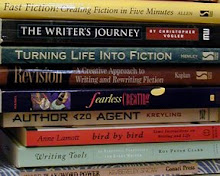
Poets and Writers New List of "Best Writing Books"--and My Personal Favs
Around this time of year, maybe because the back-to-school energy has tempted me, I begin to look at buying another writing book or two. I mark them up, use them in classes, and study them all winter during prime writing time (hibernation). This week, I came across the latest list from Poets and Writers, a wonderful resource for all of us. (If the link doesn't work, go to their website and search for "best writing books.")
It's a very comprehensive list, but I thought I'd add a few favorites of my own, books that have been well-thumbed and underlined over the years. You'll have your own favorites too.It pays every now and then to get what I call a "smart boost" by refreshing your craft skills. Hard to do when you're neck deep in a manuscript, or trying to meet a deadline, but if you can give yourself a couple of hours this week to go back to a favorite craft book or check out a new one.
A few of my favorite writing books:
Friday, October 2, 2020
Submitting to Contests: Worth It or Waste of Money and Time?
A great way to get your writing out there, seen by readers and possibly your future agent (agents browse literary journals and magazines and website), is contests. Writing contests, if you have the happy experience of winning or even placing as a finalist, can also boost your query letter/resume considerably.
Quite a few of my clients and students submit to contests regularly. "It's great practice to have a deadline," one of them told me. She tries to submit something every month, even has the next submission ready to send as soon as she gets a rejection back. "Rejections are no fun but they're part of the writing life if you want to get published. It helps me not get discouraged if I can keep sending out my work no matter what."
Why contests? They cost. (A past student emailed that she was getting ready to send an essay and some poetry to a Writer's Digest contest. Then she found out about the fee. "They CHARGE you to enter," she told me. "Is this legit?" Short answer: Yup. Many contests charge. There are also a lot of free ones.) But they also give you an entry into journals and lit magazines.
Why contests? They cost. (A past student emailed that she was getting ready to send an essay and some poetry to a Writer's Digest contest. Then she found out about the fee. "They CHARGE you to enter," she told me. "Is this legit?" Short answer: Yup. Many contests charge. There are also a lot of free ones.) But they also give you an entry into journals and lit magazines.
Friday, September 25, 2020
When Your Book Has a Mission--How Do You Keep the Story Personal and Engaging?

It launches next week (October 8) from the University of Minnesota Press. (Click on the title for more information or to preorder.)
Mindy came to me for coaching a few years ago, challenged by the teaching points she wanted to bring into her memoir as a member of her state's legislature and the mother of a son. She wanted to make sure the story itself wasn't overwhelmed by the book's mission. She also wanted help on writing about the very tough subject of living with mental illness in her family while working a high-profile job.
After years of hard work, her book will soon be in the hands of readers. It's a book to be proud of. I wanted to interview her for this week's blog post, so readers who are also bringing agendas, or strong teaching points, into their memoir (or even fiction) can learn from her success.
I wanted to interview her for this week's blog post, so readers who are also bringing agendas, or strong teaching points, into their memoir (or even fiction) can learn from her success.
Subscribe to:
Posts (Atom)


 Posts
Posts