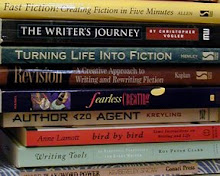
A blog reader suggested this great topic: what's the best way to go about finding the "right" writing class or conference for my book, my writing, right now?
There are so many out there, good ones and not so good. How do you choose wisely?
First, let's talk about the need for writing classes or conferences. What do they offer a writer? How can they possibly benefit you in your book-writing journey?
I'm a writing class junkie; I'll admit that first off. I love taking them and I usually love what I learn.
Friday, May 6, 2022


Friday, April 29, 2022
A New Take on Storyboards for Your Book
Last week, when I taught my all-day workshop on storyboards, I didn't tell the 30 wonderful writers my real feelings about storyboards.
Truth is, I dislike them. I revere them, and I use them because they work, but I absolutely hate the startle they bring when the process shows me all my gaps and errors: places I have too much or too little, where I've written on track or on a tangent.
Everywhere my book isn't yet working well.
Truth is, I dislike them. I revere them, and I use them because they work, but I absolutely hate the startle they bring when the process shows me all my gaps and errors: places I have too much or too little, where I've written on track or on a tangent.
Everywhere my book isn't yet working well.
Friday, April 22, 2022
My Love Affair with Scrivener--Software for Both Sides of the Brain
My love affair with Scrivener didn't exist before I wrote books. I was a dedicated Word user; I wrote stories, essays, and poems, columns and articles which suited themselves to the restrictions of a word processing program.
Short stuff doesn't demand much organization. I kept copies of the multiple versions of each short story or article in separate files within Word--I found it fairly easy to scan the directory and open when needed.
I also printed hard copies just because I had doubts about the voodoo of all-electronic at that time, and I kept them in a paper file folder until the piece was published.
Short stuff doesn't demand much organization. I kept copies of the multiple versions of each short story or article in separate files within Word--I found it fairly easy to scan the directory and open when needed.
I also printed hard copies just because I had doubts about the voodoo of all-electronic at that time, and I kept them in a paper file folder until the piece was published.
Tuesday, April 19, 2022
Query Letters That Actually Worked to Catch an Agent or Publisher
Query letters are a bear to write. So many writers who have finally published their novels, memoirs, or nonfiction books remember the agonizing process of learning how to write and refine this all-important document. It's the first thing an agent or editor (if you bypass an agent) will see of your work, so not only does it need to carry the flavor and tone of your writing, it needs to be catchy, snappy, and slick enough to stand out, while being heart-felt and authentic at the same time.
Whew.
I've personally worked harder, sometimes, on my query and synopsis than on many parts of my books. I've hired editors and coaches to just help me hone the query--that paid off, by the way--and I've given myself many months to work on it so the process didn't feel rushed. It does require a different part of the creative self than the manuscript, though, and I often found it tough to toggle between the deep immersion of writing and living in story and the marketing focus a query required.
Whew.
I've personally worked harder, sometimes, on my query and synopsis than on many parts of my books. I've hired editors and coaches to just help me hone the query--that paid off, by the way--and I've given myself many months to work on it so the process didn't feel rushed. It does require a different part of the creative self than the manuscript, though, and I often found it tough to toggle between the deep immersion of writing and living in story and the marketing focus a query required.
Friday, April 1, 2022
Narrative Perspectives--Which Will Serve Your Story Best?
Deciding who is telling your story--that's a big moment in writing a book.
But even more important is deciding where your narrator will be standing, as he or she tells the tale. Is the narrator speaking in real time, as the story is happening?
Or from what's called the "retrospective" point of view, looking back from the distance of years?
Which narrative point of view will best serve your story best? And if both will, how do you move back and forth between them, weaving them together to make a cohesive book?
But even more important is deciding where your narrator will be standing, as he or she tells the tale. Is the narrator speaking in real time, as the story is happening?
Or from what's called the "retrospective" point of view, looking back from the distance of years?
Which narrative point of view will best serve your story best? And if both will, how do you move back and forth between them, weaving them together to make a cohesive book?
Friday, March 11, 2022
A System for Tracking the "Internals" in Your Fiction or Memoir
In my post a month ago, I ranted a bit about IM, or internal monologue, a technique that so many writers use to reveal the internal landscape of a character in fiction or memoir. IM is literally a monologue--a thought process, like dialogue except not spoken aloud. (If you missed that post, go to http://HowtoPlanWriteandDevelopaBook.blogspot.com).
There are other ways to reveal internals in your story, though--not just IM. But we may not be aware, as writers, that they are already present. When I learned from one of my past students about a nifty tracking systems for internals, I wanted to try it out and share it here.
Interiority or "internals" is a fancy way to describe the reader's view into your characters' inner lives. Some genres require a lot of this (memoir), some much less (thrillers). Internals are what makes a character real to the reader. Skilled writers reveal interiority in several ways. It's important to know what your genre requires and how to plant and build the interior lives, without having them slow the momentum of the story.
There are other ways to reveal internals in your story, though--not just IM. But we may not be aware, as writers, that they are already present. When I learned from one of my past students about a nifty tracking systems for internals, I wanted to try it out and share it here.
Interiority or "internals" is a fancy way to describe the reader's view into your characters' inner lives. Some genres require a lot of this (memoir), some much less (thrillers). Internals are what makes a character real to the reader. Skilled writers reveal interiority in several ways. It's important to know what your genre requires and how to plant and build the interior lives, without having them slow the momentum of the story.
Friday, March 4, 2022
Making Your Characters Real Individuals, Making Them Stand Out
A MG (middle-grade fiction) writer in one of my past online classes posted a great question that sums up the main struggle most of us have with writing vivid characters.
How do I make my characters more distinctly individual? Different from each other, realistic enough to be believable, clearly so on the page?
Developed characters, fictional or real, should be individuals: distinct from others in the story. If they all blur together, it's hard to make them come alive for the reader.
Friday, February 25, 2022
Do You Need Quiet or Noise to Do Your Best Writing?
My home is noisy these days: two young dogs, all their toys and bones and chewsticks, the running and growling and play they love. I love it too, and I'm not in any hurry for it to change--they will only be puppies once. But my writing is. It craves quiet.
So just like a new mom or dad with an infant or toddler, I set my writing times when the pups have natural naptimes.
Before the pandemic, I wrote best in a noisy, bustling coffee shop in the next town. I'd head there with my laptop and earbuds and phone and order an exotic tea, a big enough one to keep me a few hours. Then I'd plug in my earbuds, find wordless music on my playlist, and begin writing.
So just like a new mom or dad with an infant or toddler, I set my writing times when the pups have natural naptimes.
Before the pandemic, I wrote best in a noisy, bustling coffee shop in the next town. I'd head there with my laptop and earbuds and phone and order an exotic tea, a big enough one to keep me a few hours. Then I'd plug in my earbuds, find wordless music on my playlist, and begin writing.
Friday, February 18, 2022
Word Count Goals for the Three Acts of Your Novel, Memoir, or Nonfiction Book
I've come across many templates for structuring books. Structure has become one of my geek-out topics as a teacher, editor, and writer. I love knowing how close I am to a perfect structure for a work-in-progress, whatever "perfect" might mean, because then I know where I can bend or break the rules and still keep the reader involved.
You don't have to fear that your manuscript will become a cookie-cutter without spirit or uniqueness. Structure is only the underpinnings, not the flair and freshness each writer brings.
I've long used the storyboard for structure testing. Its beauty is in its flexibility--it uses both random and linear thinking as it builds. So if you suddenly want to bring in another idea, you can. You're not bound tight to a certain progression, as an outline requires.
I've long used the storyboard for structure testing. Its beauty is in its flexibility--it uses both random and linear thinking as it builds. So if you suddenly want to bring in another idea, you can. You're not bound tight to a certain progression, as an outline requires.
Friday, February 11, 2022
Working with Internal Monologue--When Narrators Think, Remember, or Talk with Themselves on the Page
Internal monologue can be one of those complicated craft decisions for fiction and memoir writers. When to use it well, when it's not needed, what style it uses to properly show itself on the page.
Not hard to recognize: most stories have brief moments when the narrator--yourself in memoir, the point-of-view character in fiction--pauses to reflect.
They think, remember, or talk with themselves on the page, but it's all happening inside their heads, not aloud. So it doesn't fall under the regular craft guidelines that dialogue relies on.
In fact, it's a tricky beast with constantly changing rules to use it properly.
Not hard to recognize: most stories have brief moments when the narrator--yourself in memoir, the point-of-view character in fiction--pauses to reflect.
They think, remember, or talk with themselves on the page, but it's all happening inside their heads, not aloud. So it doesn't fall under the regular craft guidelines that dialogue relies on.
In fact, it's a tricky beast with constantly changing rules to use it properly.
Subscribe to:
Posts (Atom)


 Posts
Posts