From coaching hundreds of writers over the years, I've learned that writing isn't an easy gift to an overcrowded life. Sure, writing can help us heal, can give us needed fresh air inside, can help us communicate our deepest thoughts to the world in the hope of making a difference. But it will never happen unless the life you lead supports it.
So this week's post asks a hard question: How closely do your writing and life intersect?
When my writing isn't happening, or feels stuck, it often comes from a kind of disconnect between my life and the writing life I'm envisioning.
Here's an example, in another art arena.
Friday, July 22, 2022


Friday, July 15, 2022
John Truby and the British Baking Show: Why Images Are More Powerful Than Words
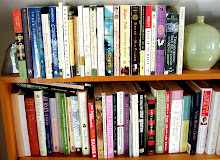
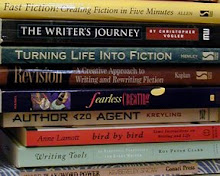
Cleaning out my writing bookshelves this week, I found an ancient set of cassette tapes recorded by Hollywood script doctor John Truby. Cassette players are a thing of my past as well, so the set will probably go into recycling. But the book insert is still valuable, as are Truby's take-away from these lectures.
Bottom line: successful movies are written with images first, words second. I remember contemplating that idea for months after I heard him say it.
My chiropractor's office has a TV broadcasting the British baking show. I go there twice a week. So far I've learned about sticky toffee cakes, tuiles (wafer-thin cookies), and many more drool-worthy treats. The characters, with their Brit accents on low volume in a noisy waiting room area are nearly impossible to understand. But the images are easy. They speak of no-holds-barred extravagance of taste and texture and aroma. I used to be a professional cook; those images carry me right back.
Bottom line: successful movies are written with images first, words second. I remember contemplating that idea for months after I heard him say it.
My chiropractor's office has a TV broadcasting the British baking show. I go there twice a week. So far I've learned about sticky toffee cakes, tuiles (wafer-thin cookies), and many more drool-worthy treats. The characters, with their Brit accents on low volume in a noisy waiting room area are nearly impossible to understand. But the images are easy. They speak of no-holds-barred extravagance of taste and texture and aroma. I used to be a professional cook; those images carry me right back.
Friday, July 8, 2022
Expansion/Contraction--Test the Pacing Strength of Your Writing
Pacing—a delicate affair in writing a book—depends on a balance of expanded and contracted moments. I think of it like breathing. Good pacing creates a rhythm between inhale and exhale, between how much we take in and how it is absorbed.
It's hard to learn. The fastest, most effective way is by reading good writing, of course. When I read a well-paced memoir or novel, I feel the author has kept my interest and delivered just the right amount of material in each chapter. There isn't any rush, but there's no lagging either.
I recently read The Farm by Joanne Ramos, published in 2019. About a community in rural New York where surrogates are paid to bear the children of the uber-wealthy, this is not an easy read. But the pacing was masterful. I read it in two days; I couldn't put it down. Similarly, I just finished The Guide, a new thriller by Peter Heller. Another challenging subject, but wonderfully written and paced. When I finished, I actually started reading it a second time, just to catch what I might have missed. A third, equally provocative book I enjoyed this month, this one a memoir, was Heating and Cooling, a series of 52 micro-stories by Beth Ann Fennelly. Two days for that one, as well.
It's hard to learn. The fastest, most effective way is by reading good writing, of course. When I read a well-paced memoir or novel, I feel the author has kept my interest and delivered just the right amount of material in each chapter. There isn't any rush, but there's no lagging either.
I recently read The Farm by Joanne Ramos, published in 2019. About a community in rural New York where surrogates are paid to bear the children of the uber-wealthy, this is not an easy read. But the pacing was masterful. I read it in two days; I couldn't put it down. Similarly, I just finished The Guide, a new thriller by Peter Heller. Another challenging subject, but wonderfully written and paced. When I finished, I actually started reading it a second time, just to catch what I might have missed. A third, equally provocative book I enjoyed this month, this one a memoir, was Heating and Cooling, a series of 52 micro-stories by Beth Ann Fennelly. Two days for that one, as well.
Friday, July 1, 2022
One of My Favorite Writing Exercises--and a Few Reasons to Try It This Week
I'm a sucker for great writing exercises. Many years ago I came across What If: Writing Exercises for Fiction Writers by Pamela Painter and Anne Bernays. I gave myself a summer task to work through the book, trying each exercise--more than once if I wanted. I dated the page I tried it and gave my thumbs up or down.
Most of the exercises worked well. What I mean: they gave me new insights into characters, ideas for plot, more concrete images for setting, a flavor of backstory that was needed. They did their job at illuminating my writing process and improving what I had on the page.
Most of the exercises worked well. What I mean: they gave me new insights into characters, ideas for plot, more concrete images for setting, a flavor of backstory that was needed. They did their job at illuminating my writing process and improving what I had on the page.
Friday, June 24, 2022
Researching Your Characters--Why It's Important to Know as Much as You Can about Them
I've been revising my second novel, A Woman's Guide to Search & Rescue, in preparation for handing over to my editor and publication team in a month or so. This book has lived with me--its characters, as well--for many years. I'm excited to see them step on to a bigger stage with more readers. But before they do, I want to make sure they are fully realized on the page, as rich and vivid as they can be.
A few months ago, to finish my final tweaks on the cast in my novel, I took an online class on character interiority. The purpose of each week's lesson--there were four--was to help writers go from what they knew about the characters externally to what the characters could reveal about their inner lives.
I'd already spent many years on this, as I said, but the class drew even more out of me about these people I've lived with for so long.
If I were to pinpoint the most important take-away, it would be backstory.
A few months ago, to finish my final tweaks on the cast in my novel, I took an online class on character interiority. The purpose of each week's lesson--there were four--was to help writers go from what they knew about the characters externally to what the characters could reveal about their inner lives.
I'd already spent many years on this, as I said, but the class drew even more out of me about these people I've lived with for so long.
If I were to pinpoint the most important take-away, it would be backstory.
Friday, June 17, 2022
Reading Voraciously--Why It Matters to Writers
I met one of my best friends--whom I later married much to my delight--over books. Early in our friendship, I asked what to offer as a gift for birthday and Christmas. The answer: "Books. Send me a box of used books, a collection of the best ones you've read."
I remember going to my favorite used bookstore to shop that November. I took a little hand-written list, titles I had on hand in my home library, but when I began browsing the bookstore shelves, I was astonished at how many books I knew--and loved.
I think I bought 30 books that day. Everything from children's books (The Dark Is Rising series) to young adult to adult fiction. Fiction was the only requirement--something to get completely lost in.
I remember going to my favorite used bookstore to shop that November. I took a little hand-written list, titles I had on hand in my home library, but when I began browsing the bookstore shelves, I was astonished at how many books I knew--and loved.
I think I bought 30 books that day. Everything from children's books (The Dark Is Rising series) to young adult to adult fiction. Fiction was the only requirement--something to get completely lost in.
Friday, June 10, 2022
Using the Short Form to Get to the Long Form--Powerful Exercises to Boost Your Creativity This Week
A good writing friend once shared this piece of wisdom: Sometimes we have to get small to get big, with our books. Book projects span a lot of time and space. It's too easy to get lost in such an expanse, overwhelmed with all the details.
In my writing classes, I used two fun exercises to help writers manage the immensity. One exercise is a poem, the other is an exploration of one of your main characters, your narrator, or your potential reader, by putting them in a five-page short story.
These two exercises are such fun, they can feel like a sidetrack away from the "real" writing. But they give a serious boost to creativity.
In my writing classes, I used two fun exercises to help writers manage the immensity. One exercise is a poem, the other is an exploration of one of your main characters, your narrator, or your potential reader, by putting them in a five-page short story.
These two exercises are such fun, they can feel like a sidetrack away from the "real" writing. But they give a serious boost to creativity.
Friday, June 3, 2022
Writing as a Way of Healing Ourselves--via the "Radical Power of Personal Narrative"
Can writing save your life, or some part of it? Does writing allow healing, or a small step towards it?
Although those living with the effects of trauma may not agree, I have used writing in my life to mitigate and sometimes heal from the effects of cancer and other trauma. Recently I was talking with a songwriter friend who has read one of my novels and I mentioned a scene that was fictionalized from my own life--and how satisfying, indeed healing, it felt to get that experience on the page. It didn't matter that I changed stuff to keep privacy; it was still cathartic.
Although those living with the effects of trauma may not agree, I have used writing in my life to mitigate and sometimes heal from the effects of cancer and other trauma. Recently I was talking with a songwriter friend who has read one of my novels and I mentioned a scene that was fictionalized from my own life--and how satisfying, indeed healing, it felt to get that experience on the page. It didn't matter that I changed stuff to keep privacy; it was still cathartic.
Friday, May 27, 2022
Writing Journals, Notebooks, and the "Commonplace Book" as Useful Tools for Book Writers
This past week I sorted old writing files. For each WIP (work in progress), I'd created a writer's notebook, a journal of my journey through the years it took to plan, write, and revise--and eventually publish the book.
Some of these journals date back a decade. It's always a TBT to review them. Quite often, the early plot or character ideas barely resemble the final version. But they are always good seeds.
I know so many writers who have this practice of writer's notebooks or journals. In my particular version, I like to add collage, quotes, articles and research, title ideas, lists of possible scenes, books I wanted to read for inspiration, and a long list of ongoing questions.
For one of my novels, I created character colleges--the purpose? to see how much more distinct I could make each of them. I wasn't succeeding with this goal until I saw the collected images. Very useful.
Some of these journals date back a decade. It's always a TBT to review them. Quite often, the early plot or character ideas barely resemble the final version. But they are always good seeds.
I know so many writers who have this practice of writer's notebooks or journals. In my particular version, I like to add collage, quotes, articles and research, title ideas, lists of possible scenes, books I wanted to read for inspiration, and a long list of ongoing questions.
For one of my novels, I created character colleges--the purpose? to see how much more distinct I could make each of them. I wasn't succeeding with this goal until I saw the collected images. Very useful.
Friday, May 20, 2022
The Joys and Challenges of Accountability--Figuring Out What Keeps You Writing
For decades I've studied the element of accountability--what it means for the creative person, especially those involved in a long-haul project like writing a novel, memoir, or nonfiction book. A colleague once joked that books are like marriages. She added, "Sometimes I miss the one-night stands."
Books are indeed long commitments, and they require creative stamina, as I posted about last week, but they also demand a system of accountability to self, to project, to whatever keeps you writing.
They take an emotional and psychological toll which can wear away at any stamina you have, unless the accountability is in place. I love this quote from writer Red Smith: "All you do is sit down at a typewriter and open a vein." How do you keep writing if you're bleeding all over the place?
Books are indeed long commitments, and they require creative stamina, as I posted about last week, but they also demand a system of accountability to self, to project, to whatever keeps you writing.
They take an emotional and psychological toll which can wear away at any stamina you have, unless the accountability is in place. I love this quote from writer Red Smith: "All you do is sit down at a typewriter and open a vein." How do you keep writing if you're bleeding all over the place?
Subscribe to:
Posts (Atom)


 Posts
Posts