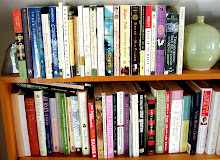
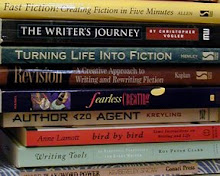
One of my favorite winter traditions in our book-loving family is the box of books we give each other for the holidays. Sometimes they come from a book-loving sibling. Sometimes from the give-away at our local recycling center or the free library down the street. Or sometimes they are bought new (or used) online.
In December, I posted a question on Facebook and got very lucky. I asked: What's your favorite novel, one you'd recommend? I got dozens of responses, and not just novels. I made a list. Some I'd heard about but an equal number were new titles. I spent a few hours online and found most of them.
Last year, my sister was the gifter and she sent five excellent books. This year, our gift box held fifteen titles. Our shelves are well stocked, so after the holiday, I choose an equal number of books we've already enjoyed to rehome. And begin choosing my first new read.
I got derailed by a surprise from another relative: three super-intriguing nonfiction titles. I allowed myself one. Soon, I'll browse our shelves.
The mix is always eclectic. Classics alongside prize winners alongside indie published but well loved. All genres. With a nice stack of movies on my Netflix queue, this will get me through winter.
What's the purpose of reading, if you're a writer?
Friday, January 13, 2023


Friday, January 6, 2023
Writing a Series--If You're Called to Connected Stories, Some Important Tips
Every now and then in my classes, a writer would ask about series. it takes a dedicated soul to even consider a clutch of books and plan for their overarching purpose. Most of us have enough challenge with just one, right?
But the question is a good one. There are indeed certain tips or techniques for those who are tempted to try two or more books using the same topic or characters.
I wasn't going to be one of those, but the characters in my first novel wouldn't leave me in peace after it was published. One of them, the narrator's father, made it into a few short stories (notably the just-published "Breathing Room" which I mentioned last post). He was challenging and interesting to write, and I felt he had a lot more to say than just one novel, or as it turns out several short stories, allowed. The young narrator of Qualities of Light also intrigued me, and I was especially taken by her love interest. So I began to wonder: what might happen three or five years down the road with this family? How might they be same, different, tragic?
That's usually what launches a writer into series land.
But the question is a good one. There are indeed certain tips or techniques for those who are tempted to try two or more books using the same topic or characters.
I wasn't going to be one of those, but the characters in my first novel wouldn't leave me in peace after it was published. One of them, the narrator's father, made it into a few short stories (notably the just-published "Breathing Room" which I mentioned last post). He was challenging and interesting to write, and I felt he had a lot more to say than just one novel, or as it turns out several short stories, allowed. The young narrator of Qualities of Light also intrigued me, and I was especially taken by her love interest. So I began to wonder: what might happen three or five years down the road with this family? How might they be same, different, tragic?
That's usually what launches a writer into series land.
Friday, December 30, 2022
Setting New Year's Goals for Your Writing--Tips, Ideas, and Why It's Fun and Helpful
In a past post, I wrote about the helpful triad of the creative artist's life: will, vision, and comfort. I heard about this from a songwriter friend many years ago, and it's helped me make sense of the sometimes-crazy artist life I lead.
Will is the drive, the push to do, the action part of the creative process. Actually sitting down in the chair in front of the laptop or notebook. Sketching out scenes, writing pages, organizing your book structure, all the activities that are required to actually produce a book. Not enough will and nothing gets done. We've all been there!
(Writer's block, though, which some feel is purely procrastination, isn't a problem of will but of the other two aspects. Read on!)
Will is the drive, the push to do, the action part of the creative process. Actually sitting down in the chair in front of the laptop or notebook. Sketching out scenes, writing pages, organizing your book structure, all the activities that are required to actually produce a book. Not enough will and nothing gets done. We've all been there!
(Writer's block, though, which some feel is purely procrastination, isn't a problem of will but of the other two aspects. Read on!)
Friday, December 23, 2022
Rest Breaks and Nonproductive Periods--How They Benefit a Book
I enjoy Loft teaching colleague Elizabeth Jarrett Andrews' occasional newsletter, PenFeathers. Her recent issue was about the challenges and benefits of rest and fallow periods in the life of the writer. She spoke about the difficulty they bring for some of us--and I immediately related. I am a poor patient, not enjoying enforced rest when ill, while my spouse loves it--the reading, the naps, the staring at nothing. I want to be up, to be productive. That trait has its blessings--I rarely get stuck with my writing goals--but easy acceptance of fallow periods is not one of them.
Sometimes life brings just what we need, not what we want. Post-Thanksgiving, I spent two weeks with covid. Nothing like some experience but still very unpleasant. Many days I could do nothing but stare. Our two dogs loved it--for once, I was motionless. Eventually, I was able to read and watch a movie. But write? No way. Everything got put on hold.
Sometimes life brings just what we need, not what we want. Post-Thanksgiving, I spent two weeks with covid. Nothing like some experience but still very unpleasant. Many days I could do nothing but stare. Our two dogs loved it--for once, I was motionless. Eventually, I was able to read and watch a movie. But write? No way. Everything got put on hold.
Friday, December 16, 2022
When to Give Up on a Book Project--and How to Tell
This isn't an easy subject to write about. It's simpler for writers working on short projects---essays, stories, articles, blog posts--to consider setting aside or trashing what they've done so far. Much more agonizing for writers working on books. All that effort, time, tears just wasted?
But there are books that are what I call "practice" projects, and they are important in the growth of the writer if not in the productivity. How do you tell if your current struggle is a sign to let the project go or a sign that you need more skills?
But there are books that are what I call "practice" projects, and they are important in the growth of the writer if not in the productivity. How do you tell if your current struggle is a sign to let the project go or a sign that you need more skills?
Friday, December 9, 2022
Story Cycles and Essay Collections--How to Think about Order, Flow, and Transitions
Books, being the long and onerous journey that they are, often benefit from the break of shorter writing projects.
I've written about this before here. I'm a writer who benefits from an occasional pause to the slog of a book. Although I used to feel mildly guilty about this sidetrack into short stories or essays, I usually come away refreshed and ready to sink into the long haul again.
Right now, as I've also shared, two of my novels are making the rounds of contests and publishers. There's nothing I can do to accelerate or make the process more successful. So I'm distracting myself with short pieces.
I've written about this before here. I'm a writer who benefits from an occasional pause to the slog of a book. Although I used to feel mildly guilty about this sidetrack into short stories or essays, I usually come away refreshed and ready to sink into the long haul again.
Right now, as I've also shared, two of my novels are making the rounds of contests and publishers. There's nothing I can do to accelerate or make the process more successful. So I'm distracting myself with short pieces.
Friday, December 2, 2022
What's the Point? Why the Purpose of Each Part of Your Writing Feels So Important to Your Reader
I've written a lot in these newsletters about the stages of writing a book--the gathering of ideas, the play that comes next as the writer explores structure and flow, the refinement and revision that follows. Some writers pay no attention to these. They mix the flow writing with the editing, and they have enough skill to produce a good book. They are he lucky ones. Most of us need to keep a map along for such an onerous journey as a book, and the stages help keep the traveler oriented to where they are in the process.
One of the big tasks that comes along, often unwelcome, is asking What's the point? Writers ask this question at all stages but often it's unanswerable until revision. That's because we may not know yet. We may be writing blind, or according to an incomplete view of our book, which is completely normal and alright. It keeps us from getting too full of ourselves in the early stages.
I've read some writing recently, both unpublished and published, that had me asking that question. For the unpublished writing, there's still time to figure out the point.
One of the big tasks that comes along, often unwelcome, is asking What's the point? Writers ask this question at all stages but often it's unanswerable until revision. That's because we may not know yet. We may be writing blind, or according to an incomplete view of our book, which is completely normal and alright. It keeps us from getting too full of ourselves in the early stages.
I've read some writing recently, both unpublished and published, that had me asking that question. For the unpublished writing, there's still time to figure out the point.
Friday, November 18, 2022
Vision versus Will--Why Both Are So Needed to Create a Good Book
I love summer and fall but I long for winter for its stillness. I'm best able to vision in stillness--and by that, I mean clearly see what I want from my writing and my life.
A good friend once shared that she sees vision as a counterpart to will. Will being the energy to push forward, to move, to make decisions, to set oneself in the chair and do the writing that's on schedule for that day.
Without vision, though, it's just typing on a page.
And that, truly, can be fine. Sometimes vision doesn't come in early drafts. Two of my favorite writers, George Saunders and Ron Carlson, write eloquently and knowledgably about the non-visioning phase of putting words on the page, how essential it is, how often it gets very messed up when visioning is involved. We stop to consider what we are saying, and we're lost. The editor mind steps in, the sheer flow of words gets stuck in analyzing.
But, equally, I find there's a place after the words are downloaded when the writer must step back and look at the vision. Really, that's what "re-visioning" is, right? The necessary act of seeing again. Of looking deeper.
A good friend once shared that she sees vision as a counterpart to will. Will being the energy to push forward, to move, to make decisions, to set oneself in the chair and do the writing that's on schedule for that day.
Without vision, though, it's just typing on a page.
And that, truly, can be fine. Sometimes vision doesn't come in early drafts. Two of my favorite writers, George Saunders and Ron Carlson, write eloquently and knowledgably about the non-visioning phase of putting words on the page, how essential it is, how often it gets very messed up when visioning is involved. We stop to consider what we are saying, and we're lost. The editor mind steps in, the sheer flow of words gets stuck in analyzing.
But, equally, I find there's a place after the words are downloaded when the writer must step back and look at the vision. Really, that's what "re-visioning" is, right? The necessary act of seeing again. Of looking deeper.
Friday, November 11, 2022
Must-Have's of First and Last Chapters
Stellar first chapters are a bear to write. They are also essential if you want to sell your book to a publisher. Most "samples" of manuscripts include the first chapter.
Equally important are ending chapters. But for a different reason: your reader. If a reader is swept away by the last pages, they are more likely to (1) read the book again and (2) recommend it to a friend. Both huge compliments and great ways to get your book read by a lot of people.
Best way to learn how to write these two most-difficult parts of a book? For me, it's by reading and studying other writers. And by allowing the beginning and ending of your own book to evolve slowly--possibly out of step with the rest of the manuscript.
I also learned via two other methods.
Equally important are ending chapters. But for a different reason: your reader. If a reader is swept away by the last pages, they are more likely to (1) read the book again and (2) recommend it to a friend. Both huge compliments and great ways to get your book read by a lot of people.
Best way to learn how to write these two most-difficult parts of a book? For me, it's by reading and studying other writers. And by allowing the beginning and ending of your own book to evolve slowly--possibly out of step with the rest of the manuscript.
I also learned via two other methods.
Friday, November 4, 2022
Writing Tough Material? Five Tools to Create a Stand-Out "Container"
Few writers I know enjoy writing "tough" material: especially when it's either dry as dust or a slap of heavy emotion. How to package such material in a way that pulls a reader in and keeps the writing from constant trauma requires skill.
Easiest way I know? Provide a stand-out "container" for that scene.
Subscribe to:
Posts (Atom)


 Posts
Posts